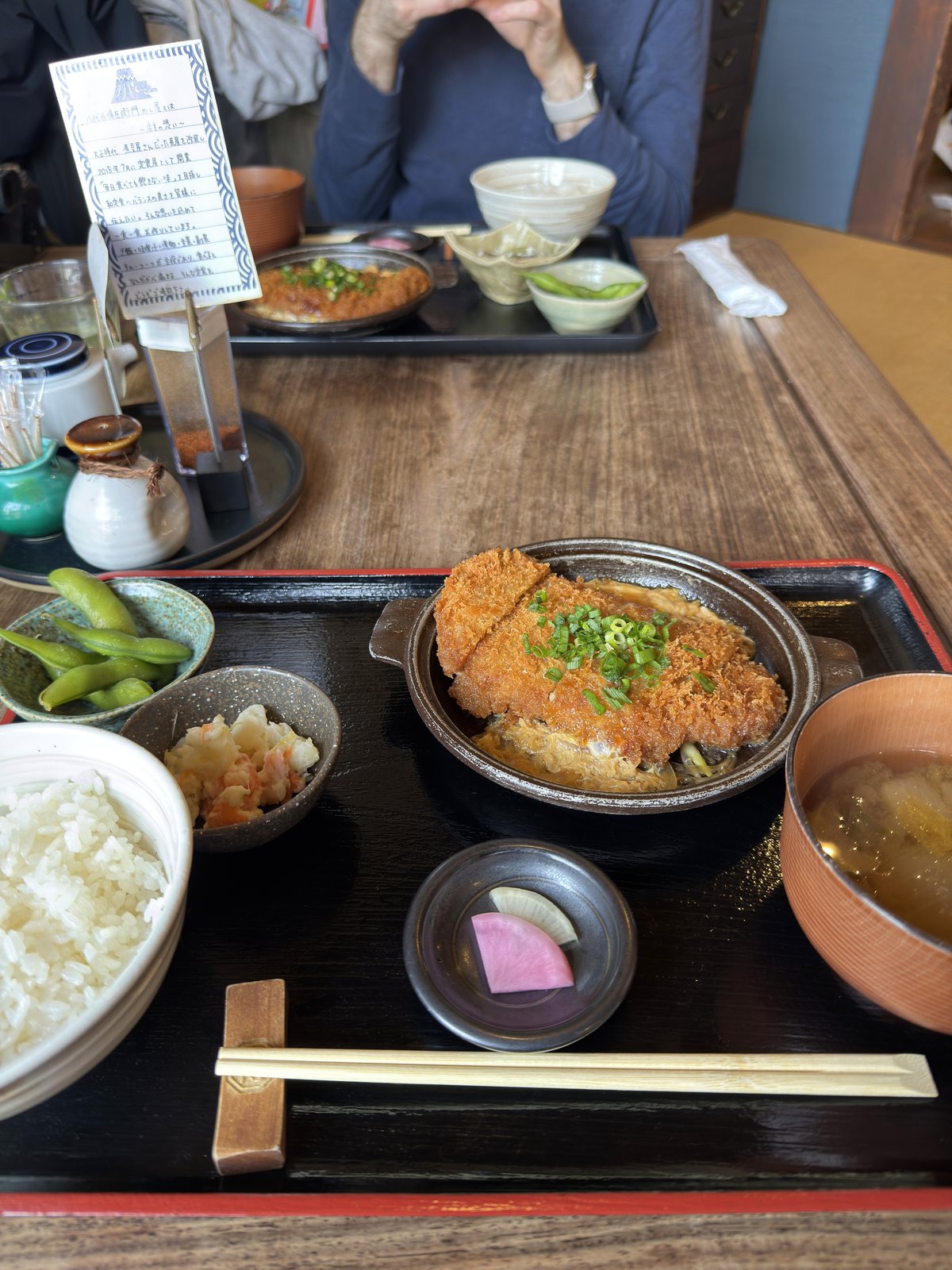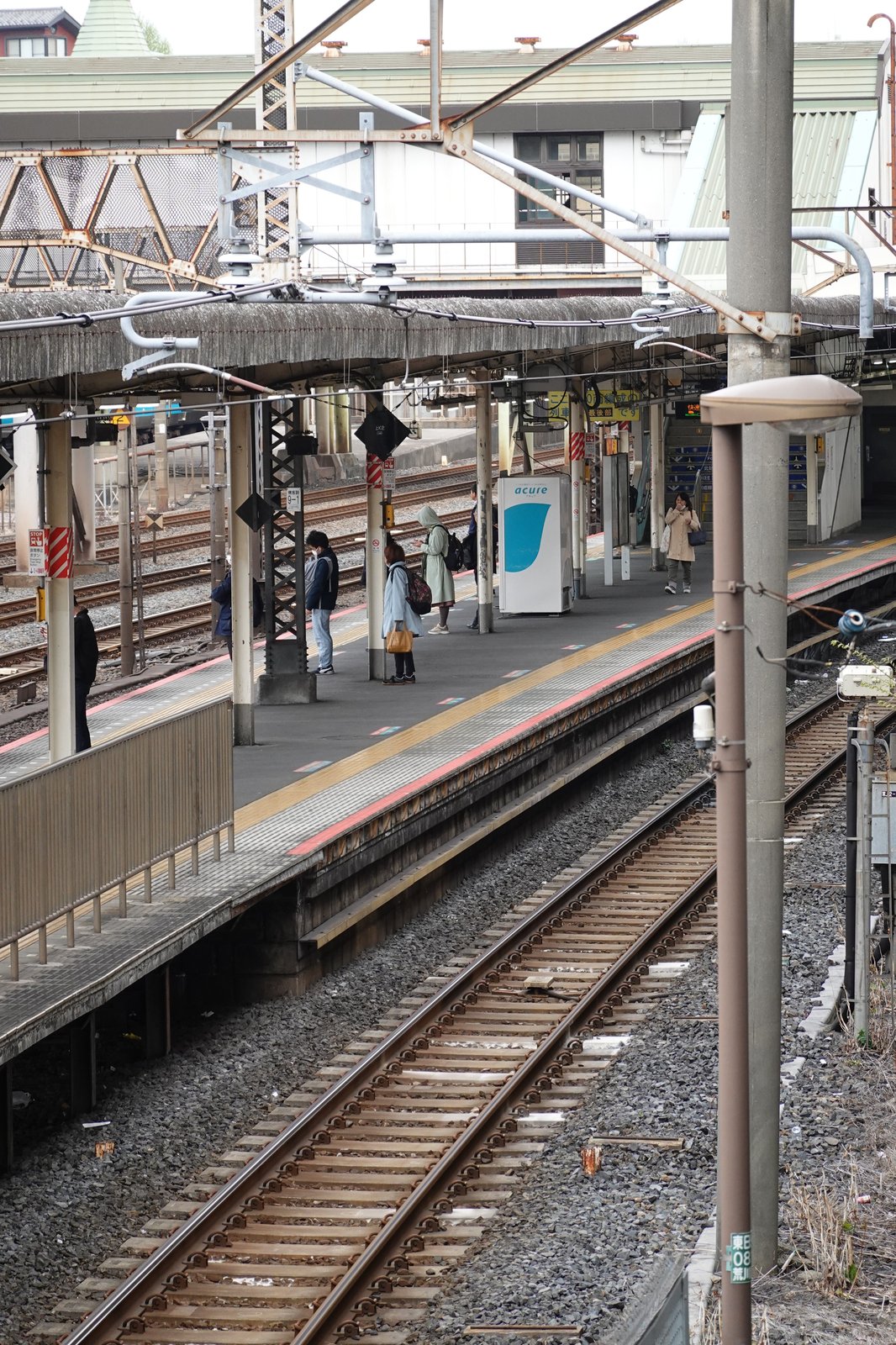
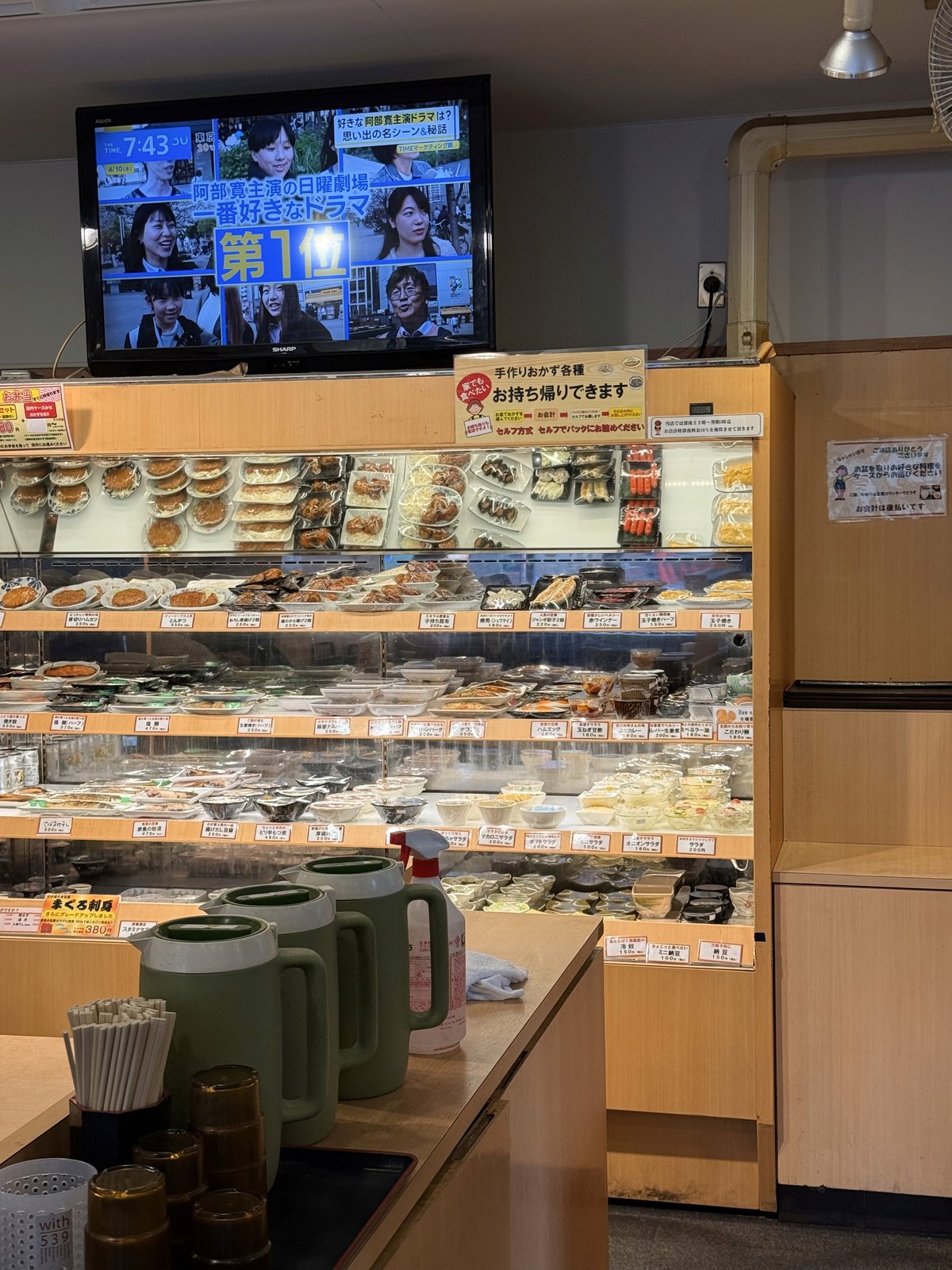
We started by walking around the neighborhood. The Yanaka side of Nippori has a big cemetery filled with cherry blossom trees, and we strolled through its little roads as people were starting their day. Past the pedestrian bridge overlooking the tracks of Nippori Station, there's a small shokudo (casual dining) breakfast place called Wagaya no Shokudo. People close to me would know well that I generally prefer totally average, simple restaurants that are far from fancy or anything. This one was exactly that. It just felt so natural coming back to the culture and cuisine of eating rice and soup with some small side dishes.
Filled up with energy from some rice, we walked along the streets to get to the Ueno neighborhood. We quickly stopped by a cafe and watched people going to school or work before heading into the Tokyo National Museum. Kids going to school, people going to work or stopping by a shrine for their morning — wherever you go, people live through their life, but the fun aspect of traveling is that you now get to observe those seemingly ordinary routines through a different lens.
Museum is a great way of understanding the background and history. The museum was quite impressive but also big, so we only browsed their main ancient collection. Probably an epilogue of what I'll encounter through the trip, it was evident that they had a history of continuously embracing outside culture and knowledge by infusing their own philosophy and interpretation into it. Of course I knew all that already, but seeing it echoes a bit differently. They didn't shy away from the fact that they were heavily influenced by Chinese and Korean ancient culture, and it actually encouraged me to look at the unique take of themselves in different elements.
The sky finally cleared as we headed out for lunch, and we almost randomly found a tonkatsu rice place called Denzaemon and walked there. This was when I started mainly speaking Japanese when interacting. Still fumbled a bit by probably saying Hitotsu three times for the same menu instead of Mitsu, but it's a start. What I like about these local small places is the intention and effort you see everywhere. A little paper note about how they renovated an old house to continue a small part of local history becomes a nice furikake over your tonkatsu rice.